
Wireless video transmission, also known as wireless video transmission, is a technology that allows an image or video to be transmitted wirelessly from one device to another. A common problem in wireless video transmission is interference, which can cause distortion or loss of transmitted images. This interference can be caused by a variety of factors, such as other wireless devices, electromagnetic interference, and physical barriers.
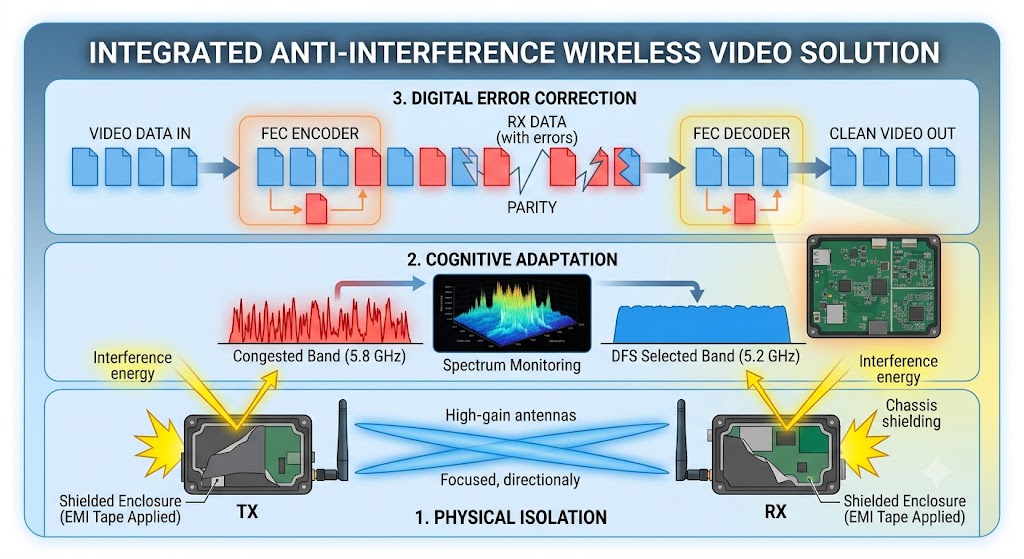
In order to solve the interference problem in wireless image transmission, various strategies can be implemented. An effective solution is to select a suitable wireless frequency band for transmission. By selecting the frequency band with lower congestion and less interference, the quality of the transmitted image can be improved. In addition, the use of directional antennas helps to focus the signal in a specific direction and reduce interference from other sources.
Another solution to the interference problem in wireless image transmission is to use encryption technology to ensure the security of transmission. By encrypting the transmitted data, it is more difficult for external sources to interfere with the signal, thus ensuring the integrity and privacy of the transmitted image. In addition, implementing error correction technology helps minimize the impact of interference on transmitted images, ensuring more reliable and consistent transmission.
To sum up, solving the interference problem of wireless image transmission requires the combination of technical solutions and strategic planning. The quality and reliability of wireless image transmission can be greatly improved by selecting the right frequency band, using directional antenna, implementing encryption technology and error correction strategy. It is important for technicians and engineers to continue to innovate and develop new technologies to overcome interference challenges and ensure seamless wireless video transmission.